Karkonosze National Park
Last updated July 2026, this guide breaks down Karkonosze National Park for first-time visitors and repeat hikers alike. Straddling the Polish-Czech border in the Sudetes, the park protects roughly 55 square kilometers of glacier-carved peaks and valleys. Karkonosze National Park draws almost 2 million visitors a year, making early planning worth the effort. This guide covers the must-see sights, cultural stops, outdoor spots, and family-friendly options worth building into an itinerary.
UNESCO recognizes the wider Karkonosze region as a Biosphere Reserve for its rare glacial flora and fauna. Almost 120 kilometers of marked trails wind through the park, including nine nature education paths for slower exploration. Whether the goal is summiting Śnieżka or a gentle walk near a mountain lake, Karkonosze National Park has a route for it.
Must-See Karkonosze Attractions
Karkonosze National Park packs a wide range of sights into a compact stretch of the Sudetes. Śnieżka rises to 1,603 meters and remains the highest peak in the range, with a chapel and weather station at its summit.
Hikers short on time can ride the chairlift from Karpacz to Kopa, then finish the climb on foot. The full route sits inside the Śnieżka mountain hike guide for turn-by-turn directions.
Wang Church charges a modest entrance fee, and the interior rewards a slow look at hand-carved portals. Mały Staw sits an easy walk from several trailheads, making it a natural rest stop before or after Śnieżka. Plan extra time at Kamieńczyk Waterfall in spring, when snowmelt makes the drop especially dramatic.
- Śnieżka Summit and Chairlift Access
- Elevation: 1,603 meters
- Feature: historic chapel, weather station
- Access: hike or Karpacz chairlift
- Wang Church in Karpacz Village
- Built: 12th-century Norwegian stave church
- Moved: relocated to Karpacz 1800s
- Entry: about 13 zł adults
- Mały Staw Lake and Samotnia Hut
- Type: glacial lake, mountain shelter
- Best for: short scenic hikes
- Kamieńczyk and Szklarka Waterfalls
- Kamieńczyk: highest waterfall in Sudetes
- Szklarka: shorter, family-friendly walk
Museums, Art, and Culture in Karkonosze
Wang Church stands out as the cultural anchor of the Karkonosze foothills near Karpacz. Built in Norway during the 12th century, the stave church was dismantled and rebuilt here in the 1840s. It now ranks as the oldest wooden church still standing in Poland, with carved portals inside the cloister walls.
Near the Wilcza Poręba information center, the Garden of Herbs and Shrubs of the Giant Mountains displays native alpine plants. Just beside it, the Laborant's House tells the story of generations who gathered mountain herbs for medicine and trade. Both stops pair well with a short walk and add historical depth beyond the trail network.
These cultural sites round out a Karkonosze National Park visit for travelers who want context alongside scenery. Set aside 30 to 45 minutes for the church and garden combined, longer if a guided tour is running. Interpretive panels along the trails also explain the post-glacial landscape in several languages.
Parks, Gardens, and Outdoor Spots in Karkonosze
Śnieżne Kotły, the Snowy Cirques, sits in the park's western section and draws hikers to dramatic rock walls. Ridge paths there overlook a roughly 120-meter drop, one of the more striking views in the range. Nearby granite formations carry playful names, including Pielgrzymy (Pilgrims) and Trzy Świnki (Three Pigs).
The Upa peat bog holds Ramsar Convention protection as habitat for rare subarctic plants and insects. Wolf's Creek Valley (Wilczy Potok) makes an easy detour for anyone curious about the herbs used in old mountain remedies. Owl Valley (Sowia Dolina) once yielded blood-red garnets, and traces of that mining history still show along the path.
These outdoor spots reward slower travelers who want more than a summit photo from Karkonosze National Park. For a wider view of hiking regions across the country, the Nature in Poland: Travel Guide 2026 compares several parks. Bring layers even in summer, since weather on exposed ridges shifts quickly above the tree line.
Family-Friendly and Budget-Friendly Options in Karkonosze
Entry to Karkonosze National Park runs on a simple ticket system rather than a flat gate fee. A one-day ticket lists at PLN 9 regular and PLN 4.50 discounted, with a three-day pass at PLN 24 or PLN 12. Prices shift occasionally, so confirm current rates on the official park website before a visit.
Families with younger kids tend to do best on shorter loops near Mały Staw or the walk to Szklarka Waterfall. Both routes stay mostly flat and rarely take more than two hours round trip. The Karpacz chairlift up to Kopa also works well for families who want mountain views without a full Śnieżka climb.
Karpacz itself keeps guesthouse and food prices lower than resort towns further west, which helps stretch a travel budget. The Karpacz Poland Travel Guide 2026 covers where to stay and eat near the park entrance.
After a long trail day, a soak at a local thermal spa is a popular way to unwind. Visitors near Jelenia Góra can BOOK A TREATMENT at a nearby wellness center.
How to Plan a Smooth Karkonosze Attractions Day
Late spring through early autumn brings the most stable weather for a Karkonosze National Park day trip. Ridge sections above the tree line stay exposed, so wind and sudden fog can slow a hike even in July. Winter visits are possible but require proper gear, since ice forms quickly on the upper trails.
Weekend mornings in July and August near Karpacz draw large crowds. Arrive before 9 a.m. for easier parking, or visit weekdays or shoulder seasons in May and September for far fewer hikers.
| Visit Type | Duration | Start Point | What to Do |
|---|---|---|---|
| Half-Day Visit | 3–4 hours | Karpacz chairlift to Kopa | Short Śnieżka summit push; skip outlying valleys and gardens |
| Full-Day Visit | 6–8 hours | Wang Church early morning | Śnieżka plus Mały Staw loop with Kamieńczyk Waterfall detour |
| Two-Day, Slower-Paced | 2 days | Varied by day | Day 1: Śnieżka and lakes; Day 2: Śnieżne Kotły and herb garden. Best for photographers and families. |
Ridge sections above the tree line stay exposed, so weather shifts rapidly even in summer. Bring layers and plan visits for late spring through early autumn when conditions are most stable.
Karpacz and Szklarska Poręba both work as base towns, each with marked trailheads into the park. Nine nature education trails add signposted stops that explain local geology and plant life along the way. Trail maps and current conditions are posted at park information points before setting out.
How much time is available usually decides the best route through Karkonosze National Park. The breakdown below matches common visit lengths to a realistic plan.
Weekend mornings around Karpacz get busy in July and August, so an early start avoids the worst crowds. Weekday visits or a shoulder-season trip in May or September tend to feel far less crowded. Arriving before 9 a.m. also means easier parking near the main trailheads.
- Half-Day Visit, Three To Four Hours
- Start: Karpacz chairlift to Kopa
- Do: short Śnieżka summit push
- Skip: outlying valleys and gardens
- Full-Day Visit, Six To Eight Hours
- Start: Wang Church early morning
- Do: Śnieżka plus Mały Staw loop
- Add: Kamieńczyk Waterfall detour
- Two-Day, Slower-Paced Visit Option
- Day 1: Śnieżka and lakes
- Day 2: Śnieżne Kotły, herb garden
- Best for: photographers, families
Nearby Trails and Natural Wonders to Explore
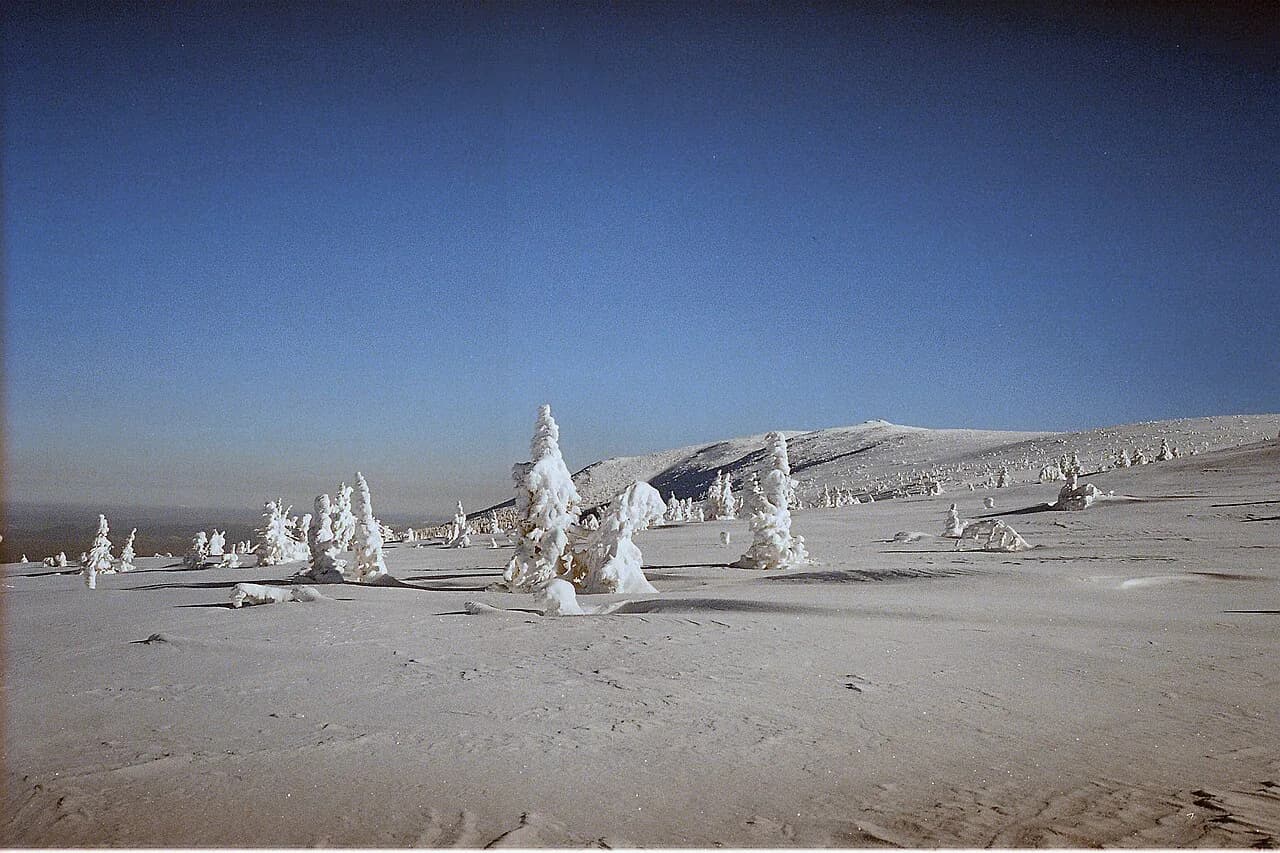
Karkonosze's post-glacial landscape earned it the nickname Scandinavian nature in the heart of Europe. Pleistocene-era glaciers carved the cirques and moraines that still shape the ridgeline today. Several plant species here normally grow much farther north in Scandinavia, surviving as glacial relicts.
The Path Under the Forested Hills, known locally as Ścieżka nad Reglami, spans almost 30 kilometers through quieter terrain. It passes through the Black Jagniątkowski Cirque and sees far fewer hikers than the routes up to Śnieżka. This makes it a solid pick for travelers who prefer a longer, calmer walk over a crowded summit.
Karkonosze is not the only mountain park worth a stop in this corner of Poland. About two hours away, the Table Mountains guide covers a very different landscape of flat-topped sandstone plateaus. Pairing both parks over a longer trip shows how varied the Sudetes and neighboring ranges can be.
Mountain Huts and Camping in Karkonosze National Park
Karkonosze's network of PTTK-run mountain shelters, known locally as schroniska, lets multi-day hikers break up the climb with a bed, a hot meal, and often a beer partway up the ridge rather than descending each night. These huts sit directly on or just off the main trails, spaced roughly two to four hours' walk apart, and many day hikers stop in just for a meal.
- Samotnia, on the shore of Mały Staw, is the most photographed hut and fills up fastest on summer weekends
- Strzecha Akademicka and Dom Śląski sit close to the ridge near Śnieżka, handy for an early summit push
- Schronisko pod Łabskim Szczytem serves hikers approaching from Szklarska Poręba on the western side
Reservations are worth making well ahead for July and August stays, since rooms are limited and often bunk-style. Most huts accept cash only, and several close for a few weeks in November for maintenance between seasons. Wild camping is not permitted inside the national park; overnight stays outside the huts are restricted to a handful of designated bivouac fields, and open fires are limited to marked spots near them.
Getting to Karkonosze National Park
Karkonosze National Park sits in Lower Silesia, roughly 100 km southwest of Wrocław, the region's main airport hub. From Wrocław, drivers take the S3 expressway toward Jelenia Góra, then local roads to Karpacz or Szklarska Poręba, a drive of about 1.5 to 2 hours depending on traffic. Jelenia Góra also has direct train service from Wrocław and Warsaw, plus regional connections from Legnica, making it the easiest rail gateway into the mountains.
From the Jelenia Góra bus station, regional buses run to both Karpacz (about 30 minutes) and Szklarska Poręba (about 45 minutes), with more frequent departures on summer weekends. Travelers without a car can reach either base town this way and pick up marked trailheads on foot from the bus stop.
Driving gives more flexibility for reaching outlying trailheads like Jagniątków or Przesieka, but paid parking lots near the main entrances fill by mid-morning on July and August weekends. Arriving by bus avoids the parking search entirely, though it limits which trailhead a hiker can start from.
Frequently Asked Questions
What is Karkonosze National Park known for?
Karkonosze National Park is known for Śnieżka, the highest peak in the range, and its post-glacial cirques and lakes. The park also protects rare Scandinavian relict plants and the historic Wang stave church near Karpacz.
Is Karkonosze National Park good for families?
Yes, several routes near Mały Staw and Szklarka Waterfall stay flat and short enough for younger kids. The Karpacz chairlift also lets families reach mountain views near Kopa without a full climb to Śnieżka.
What Polish city is Karkonosze National Park near?
Karkonosze National Park sits closest to Karpacz and Szklarska Poręba, both popular base towns for hikers. Jelenia Góra, a larger city with more transport links, lies a short drive from both trailhead towns.
What are the best trails to hike in the Karkonosze Mountains?
Popular routes include the climb to Śnieżka summit and the walk to Mały Staw and Samotnia hut. For a quieter option, Ścieżka nad Reglami runs almost 30 kilometers through the Black Jagniątkowski Cirque.
How much does it cost to enter Karkonosze National Park?
Recent listings show a one-day ticket around PLN 9 regular and PLN 4.50 discounted, with three-day passes near PLN 24 or PLN 12. Confirm current rates on the official park website before a visit, since fees can change.
Karkonosze National Park rewards travelers willing to mix a summit push with slower cultural and nature stops. Śnieżka, Wang Church, and the quieter Ścieżka nad Reglami trail each show a different side of the range. Matching a route to the time available makes the difference between a rushed visit and a memorable one.
Start with the must-see list above, then adjust for season, budget, and how many days are on hand. For more Poland hiking and outdoor picks, the Poland travel blog covers additional regions worth exploring. A well-planned day here still leaves room for a relaxed evening back in Karpacz.
You might also like


Continue reading
More guides you'll find useful