Centennial Hall Wrocław: A UNESCO Guide to Max Berg's Concrete Landmark
Last updated July 2026: Centennial Hall Wrocław carries UNESCO World Heritage status, and this guide breaks down what that means for a visit today. Max Berg's 1913 reinforced-concrete dome anchors a wider complex that includes the Four Domes Pavilion, the Pergola, and the Iglica needle. Plan one to two hours for the hall itself, or a half-day if you pair it with the neighboring Zoo and Japanese Garden.
What Is Centennial Hall Wrocław? A 1913 Concrete Landmark in Lower Silesia
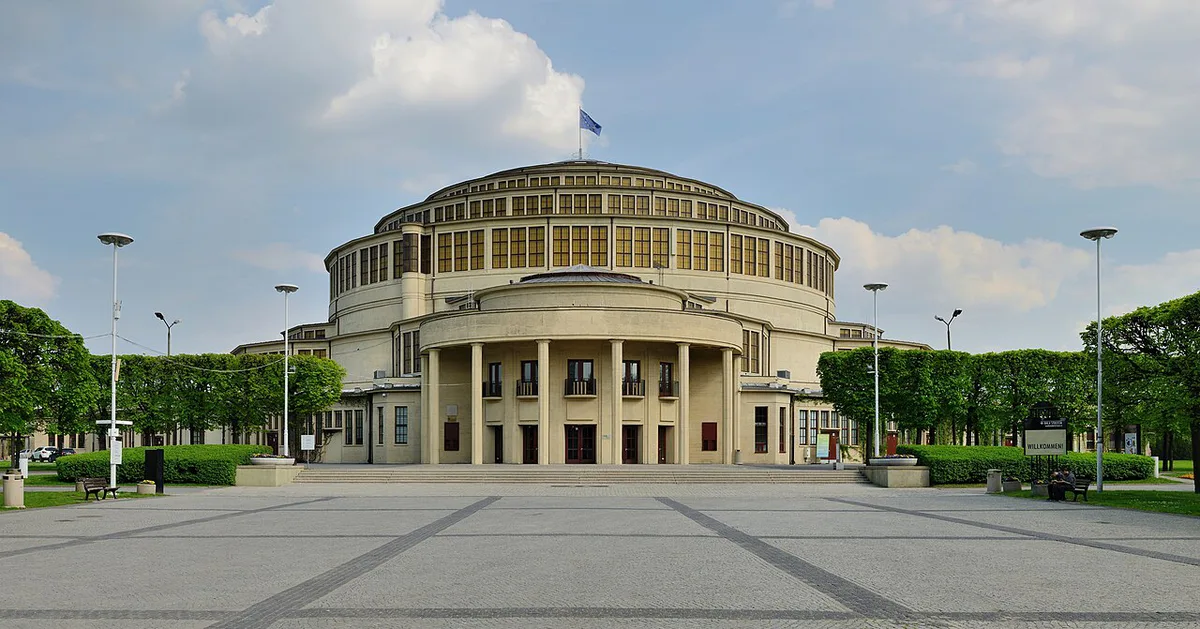
Centennial Hall opened on 20 May 1913 as the Jahrhunderthalle, built to mark the 100th anniversary of the Battle of Leipzig. Architect Max Berg designed it as a multi-purpose venue for exhibitions, concerts, opera, and sport. Postwar authorities renamed it Hala Ludowa, meaning People's Hall, after Wrocław became part of Poland in 1945. The Polish name Hala Stulecia later became official. The building sits in Lower Silesia (Dolny Śląsk), within Wrocław's historic exhibition grounds. In our editorial assessment, the hall rewards architecture buffs most, along with travelers already headed to the Zoo or the Japanese Garden next door.

Why Centennial Hall Wrocław Earned UNESCO World Heritage Status
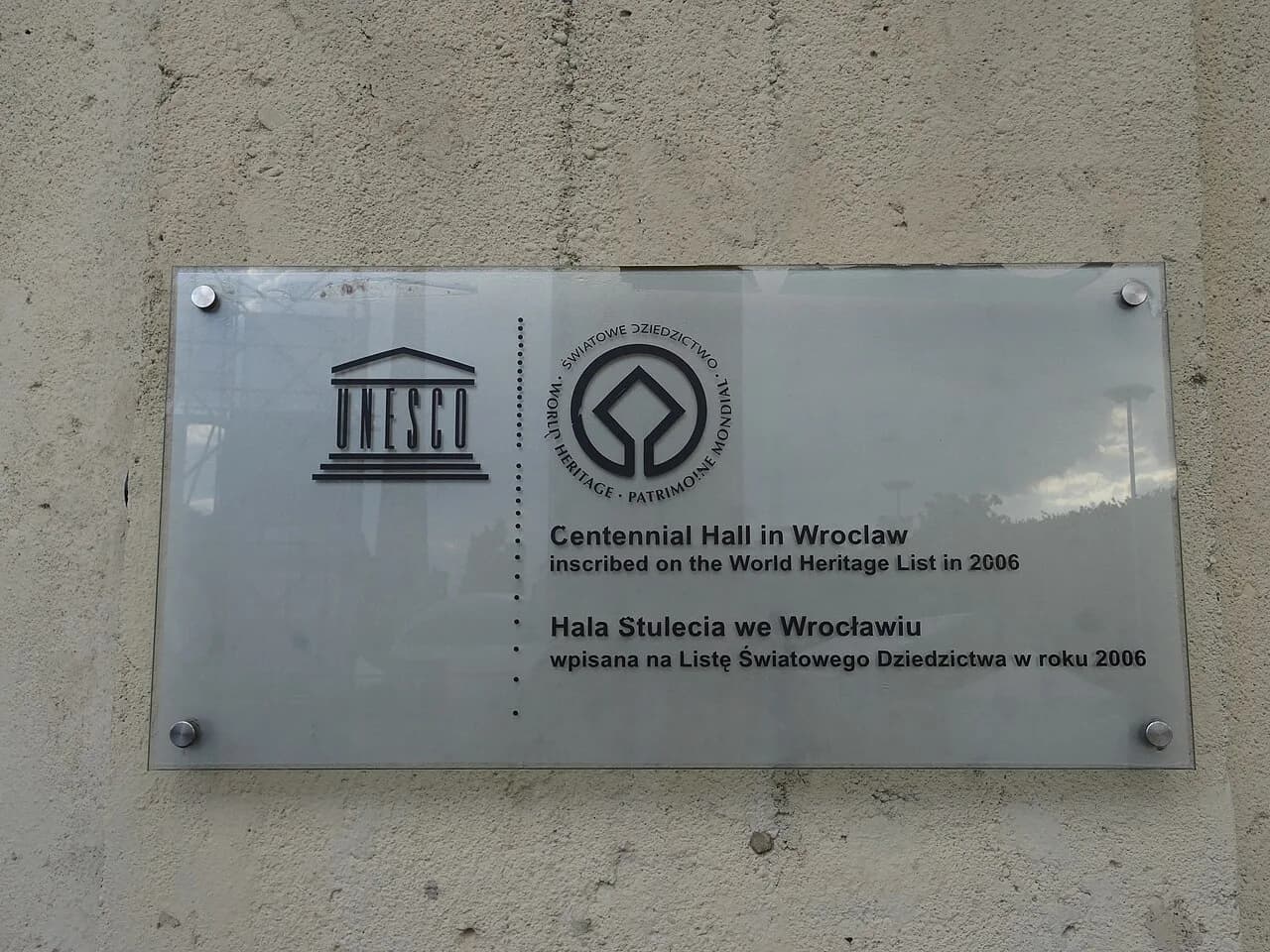
UNESCO inscribed Centennial Hall in 2006, during the 30th session of the World Heritage Committee, under criteria i, ii, and iv. The listing recognizes the building as one of the earliest landmarks of reinforced-concrete construction. Engineers Günther Trauer, Richard Konwiarz, and Heinrich Müller-Breslau worked with contractor Dyckerhoff & Widmann AG to build it. At completion in 1913, its dome was the largest reinforced-concrete span in the world. The hall's original name, Jahrhunderthalle, commemorated the Battle of Leipzig. Allied forces defeated Napoleon there in October 1813, after King Frederick William III's proclamation An Mein Volk earlier that year. That layered history, German Breslau becoming Polish Wrocław after WWII, connects to the wider story covered in the Poland's history and WWII guide.
| Detail | Fact |
|---|---|
| Year inscribed | 2006 (30th session) |
| Criteria | i, ii, iv |
| UNESCO reference | No. 1165 |
| Protected components | Centennial Hall, Four Domes Pavilion, Pergola, Iglica |
| Poland Historic Monument status | Designated 13 April 2005 |
Inside the Visitor Experience: Hall, Pergola, and Iglica
The Visitor Centre is the most reliable way to see the hall's interior. The main floor closes often for concerts, business summits, and private events. Its Discovery Centre exhibition covers Max Berg's engineering methods and the building's construction history. It also includes a virtual-reality tour for days when the arena floor is off-limits. When the floor is open, look up at the dome and the hall's historic pipe organ, installed for the 1913 opening. Outside, the Pergola frames a pond with a Multimedia Fountain. In our editorial assessment, its free evening shows are the best low-cost activity on the grounds. The Iglica, a 106-meter (348-foot) steel needle erected in 1948, stands in front of the hall as a postwar symbol of the rebuilt city.
The Iglica needle was added in 1948, decades after Centennial Hall's 1913 opening, yet UNESCO's 2006 inscription protected both as a unified complex alongside the Pergola and Four Domes Pavilion. This demonstrates that Wrocław's exhibition grounds accumulated heritage significance across distinct historical periods—from Berg's concrete engineering to postwar reconstruction symbolism.
- Centennial Hall — Max Berg's 1913 reinforced-concrete arena, the centerpiece of the UNESCO listing.
- Four Domes Pavilion — former exhibition hall, now a branch of the National Museum in Wrocław.
- The Pergola — a curved concrete colonnade around the pond and Multimedia Fountain.
- The Iglica — a 106-meter (348-foot) steel needle added in 1948.
- Japanese Garden — laid out alongside the 1913 exhibition grounds, north of the pond.
From Sports Arena to Renovated Landmark
Centennial Hall has hosted major international sport since the 1960s. It held EuroBasket in 1963 and a preliminary round of EuroBasket 2009, plus the 1997 World Wrestling Championships and the 2000 European Judo Championships. It later staged the 2009 Women's European Volleyball Championship, the 2013 World Weightlifting Championships, the 2014 FIVB Volleyball Men's World Championship, and the 2016 European Men's Handball Championship. A 2009–2011 renovation modernized the venue and set its current capacity at about 10,000 seats for major events. In October 2014, the Getty Foundation awarded a $200,000 grant under its Keeping It Modern conservation program, supporting work on the reinforced-concrete structure. The hall also appears on screen: production crews filmed arena scenes for The Hunger Games: The Ballad of Songbirds and Snakes inside the building.
Max Berg's 1913 multi-purpose design—originally intended for exhibitions, concerts, and sport—proved resilient enough to host major international athletics for over six decades. This continuous use didn't diminish the building's historic significance; rather, a Getty Foundation conservation grant in 2014 specifically supported the reinforced-concrete structure, demonstrating how modern programming and UNESCO-level preservation coexist.
- Boxing configuration: 11,000
- Basketball configuration: 10,000
- Volleyball configuration: 10,000
- Handball configuration: 8,500
Planning Your Visit: Tickets, Timing, and Getting There
Visitor Centre tickets cover the Discovery Centre exhibition and hall access when the floor is open. Event tickets for concerts or matches are sold separately and don't include the exhibition. Trams connect Wrocław Główny, the main train station, and the Rynek in the Old Town directly to the Hala Stulecia stop. Check the hall's events calendar before you go. Skip the interior on days with a closed-door summit or a full-arena concert, and default to the Visitor Centre and grounds instead.
- Hall and Visitor Centre only: 1–2 hours
- Add the Four Domes Pavilion and Pergola grounds: 3–4 hours
- Combine with Wrocław Zoo next door: half a day to a full day
Mistakes to Avoid at Centennial Hall
Three planning errors show up again and again around visits to Centennial Hall.
- Arriving during a major concert or summit without checking the events calendar first — interior access can be limited or closed entirely.
- Timing a visit around the Multimedia Fountain incorrectly; shows usually run hourly, but special evening performances follow a separate calendar.
- Underestimating the walk from the tram stop to the Four Domes Pavilion and Japanese Garden — the grounds are larger than a map suggests.
Expanding Your Polish History Itinerary
Centennial Hall represents early 20th-century engineering ambition, a counterpoint to the somber sites documented in the Warsaw Ghetto Uprising sites guide. Wrocław's approach to preservation restores an original structure rather than reconstructing a lost one. That also contrasts with the recreated spaces at the Rynek Underground Museum in Kraków. Silesia's industrial history under German and then Polish administration echoes the wartime industry covered at Schindler's Factory Museum. For broader context on Poland's Jewish heritage sites, see the Ghetto Heroes Square guide. For a broader look at how Poland preserves difficult 20th-century heritage, the Płaszów concentration camp site offers an instructive comparison to Centennial Hall's own preservation.
Getting to Centennial Hall by Tram
The most practical public-transport route is to aim for the Hala Stulecia stop on ul. Wróblewskiego, then follow signs toward the Iglica and the main entrance. From Wrocław Główny, use the tram platforms around Dworcowa, Piłsudskiego, Małachowskiego, or Peronowa, depending on where you exit the station complex.
- Usual direct choices from the main-station area are trams 2 or 4 toward Biskupin; on operating days, tram 0 toward Zoo also reaches the same exhibition-grounds area.
From the Rynek, walk east toward Galeria Dominikańska or Oławska for tram 10 toward Biskupin, or south toward Świdnicka if tram 2 is more convenient. Check the platform display before boarding because Wrocław route changes and roadworks can temporarily move stops. After arrival, allow 5–10 minutes on foot for the Visitor Centre, and longer if you are continuing around the Pergola to the Four Domes Pavilion or Japanese Garden.
Further reading: Poland on Wikivoyage · Poland on Wikipedia
Frequently Asked Questions
Is Centennial Hall Wrocław worth visiting?
Yes, especially for architecture and early 20th-century design. Its UNESCO status recognizes an early reinforced-concrete dome, and the surrounding Pergola, Iglica, and Japanese Garden extend a visit well beyond the building itself.
What does the Centennial Hall UNESCO listing cover?
The 2006 UNESCO inscription protects Centennial Hall together with the Four Domes Pavilion, the Pergola, and the Iglica needle, listed under criteria i, ii, and iv.
Can you go inside Centennial Hall when an event is scheduled?
Not always. The main floor closes for concerts, sporting events, and business summits, so check the events calendar first and use the Visitor Centre and Discovery Centre exhibition as a backup when the floor is occupied.
How much time should you plan for a visit to Centennial Hall?
Budget one to two hours for the hall and Visitor Centre. Add the Four Domes Pavilion and Pergola grounds for three to four hours, or make it a half-day if you combine the visit with Wrocław Zoo next door.
How do you get to Centennial Hall from central Wrocław?
Trams run directly from Wrocław Główny, the main train station, and from the Rynek in the Old Town, to the Hala Stulecia stop, so a car isn't necessary.
When does the Multimedia Fountain run at Centennial Hall?
Shows generally run on an hourly schedule, with special evening performances following a separate calendar. Confirm the current schedule locally before planning an evening visit.
You might also like


Continue reading
More guides you'll find useful