Visiting the Płaszów Concentration Camp Memorial in Krakow
Last updated July 2026, this guide to the Płaszów concentration camp in Krakow explains what the site looks like today: an open-air memorial park, not a museum with exhibits. Between October 1942 and January 1945, SS commandant Amon Göth ran the camp on land that had been two Jewish cemeteries in the Podgórze and Wola Duchacka districts. Use this page to separate that history from the quiet, green space visitors find now, and to plan a walk that takes roughly 1.5 to 2 hours.
What the Płaszów Concentration Camp in Krakow Looks Like Today
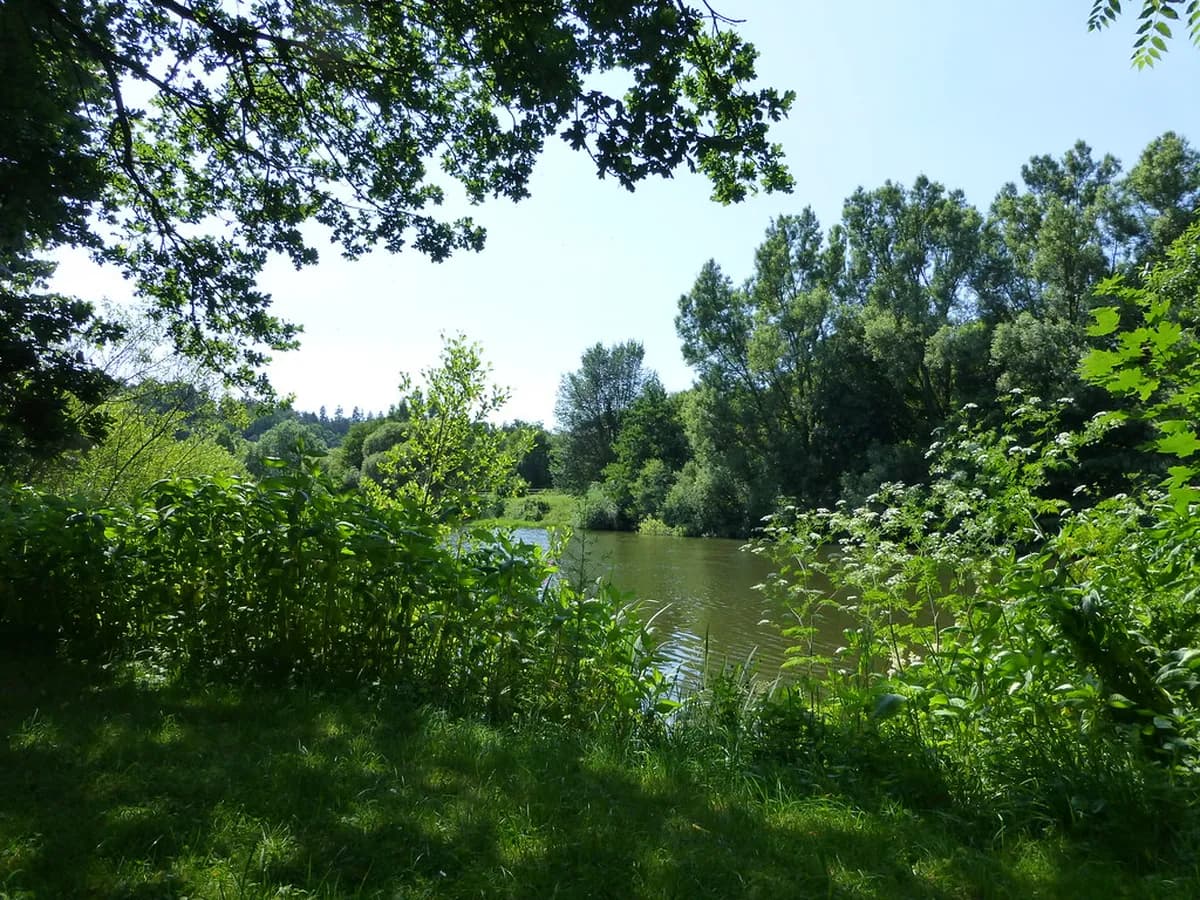
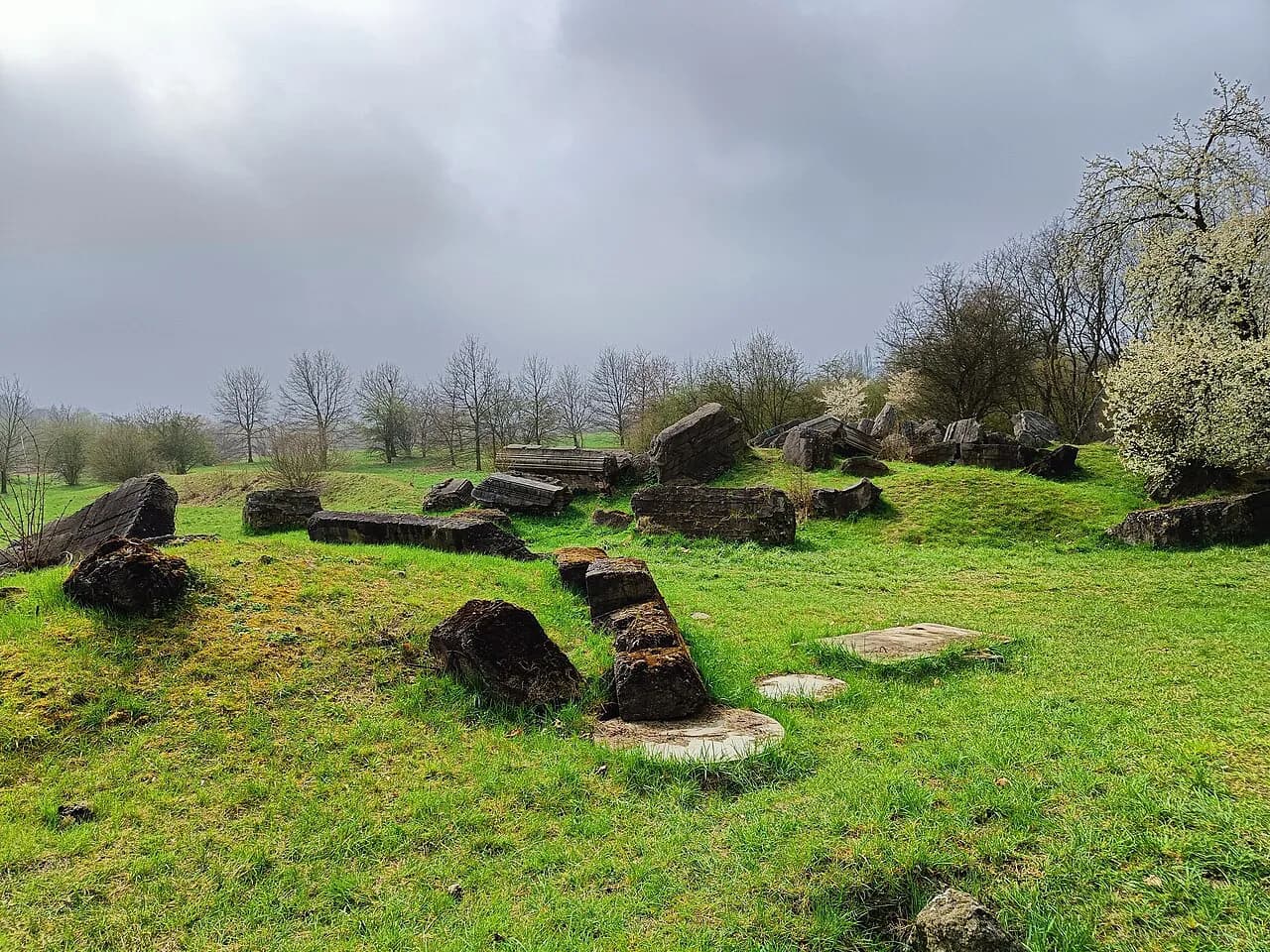
Płaszów is not Auschwitz-Birkenau, and it is not the Schindler's Factory Museum. There are no ticket booths, no glass display cases, and no fixed exhibition halls waiting at an entrance. The former camp grounds form a hilly, partly wooded public park across the Podgórze and Wola Duchacka districts, south of Krakow's Old Town. What remains are a handful of monuments, informational plaques installed by the Historical Museum of the City of Kraków, a few surviving buildings, and open grassland where barracks once stood. Visiting Płaszów takes more background reading than a stop at a conventional museum. The site tells its story through absence as much as through what's still standing.
Płaszów at a Glance: Key Dates and Facts
A few fixed reference points help before you dig into the fuller history below.
- Operational: 28 October 1942 to January 1945
- Commandants: Amon Göth (1943 to September 1944), then Arnold Büscher (September 1944 to January 1945)
- Liberated by: the Red Army, 20 January 1945
- Built on: two former Jewish cemeteries in Podgórze
- Official information: plaszow.org, the memorial project's website
History of Kraków-Płaszów: From Labor Camp to Concentration Camp (1942-1945)
The SS built the camp on the grounds of two Jewish cemeteries in Podgórze, the old and new burial grounds, both demolished for construction. Deportations began on 28 October 1942. The camp filled rapidly after the liquidation of the Krakow ghetto on 13-14 March 1943, an event now commemorated at Ghetto Heroes Square. Jews judged unfit for work during the liquidation were sent to Auschwitz or shot on the spot. Those declared capable of labor were marched into Płaszów instead. In 1943, the SS expanded the site and folded it into the main Nazi concentration-camp system, upgrading it from a standalone forced-labor camp. Płaszów operated within the General Governorate of occupied Poland until January 1945, when the SS evacuated the remaining prisoners days before the Red Army liberated the area on 20 January 1945.
Camp Structure: How Płaszów Was Divided
The SS split Płaszów into distinct zones rather than running it as one undivided camp, though contact between sections still happened in practice.
- Personnel area: housing and offices for SS staff, separate from all prisoner zones.
- Male prisoners' section: the largest zone, supplying forced labor to factories and the camp's stone quarry.
- Female prisoners' section: smaller than the men's camp; work facilities were designed mainly for men, which gave women a lower survival rate.
- Jewish police barracks: separate housing for the camp's Jewish police and their families, who received double rations for enforcing SS orders on other prisoners.
Amon Göth and the SS Command at Płaszów
Amon Göth, an SS officer from Vienna, took command of Płaszów in 1943 and ran it with documented brutality. Survivor testimony describes shootings as a near-daily occurrence under his command. On his first day, he killed two Jewish policemen in front of the assembled camp. His staff was mostly non-German. Around 206 Ukrainian SS-trained guards from Trawniki served at the camp, alongside roughly 600 Germans of the SS-Totenkopfverbände between 1943 and 1944. A small number of SS women also worked as guards, and survivor accounts describe them as no less violent than the men. On 13 September 1944, the SS relieved Göth of command and charged him with theft of prisoner property and violations of camp regulations. His successor, Arnold Büscher, ran the camp until the January 1945 evacuation and reportedly improved food rations, adding eggs, sugar, and powdered milk to the prisoner diet.
Prisoner Life, Forced Labor, and the Death Toll
Płaszów supplied forced labor to armament factories and a stone quarry. Most prisoners were Polish Jews, and the camp held unusually high numbers of women and children compared with other concentration camps. There were no gas chambers or crematoria at Płaszów. Killings were carried out by shooting, with the elderly and sick the most frequent targets. Hujowa Górka, a hillside near the camp, became the main execution ground. Trucks brought condemned prisoners from Krakow three to four times a week, and roughly 8,000 deaths are associated with that single site. In early 1944, the SS exhumed and burned the buried remains to try to destroy the evidence. Witnesses later testified that 17 truckloads of human ashes were scattered around the area.
What to See at the Płaszów Memorial Site Today
Five features anchor a walk through the memorial park. None carries the signage density of a conventional museum trail, so look for markers rather than expect them at every turn.
Płaszów's story emerges from absence as much as presence: demolished barracks left only grassland, cemetery foundations remain buried and unmarked, and monuments are spaced across the site rather than concentrated, requiring visitors to read history through what's missing.
- Monument to the Victims of Fascism: a large sculptural memorial and the main formal monument on site.
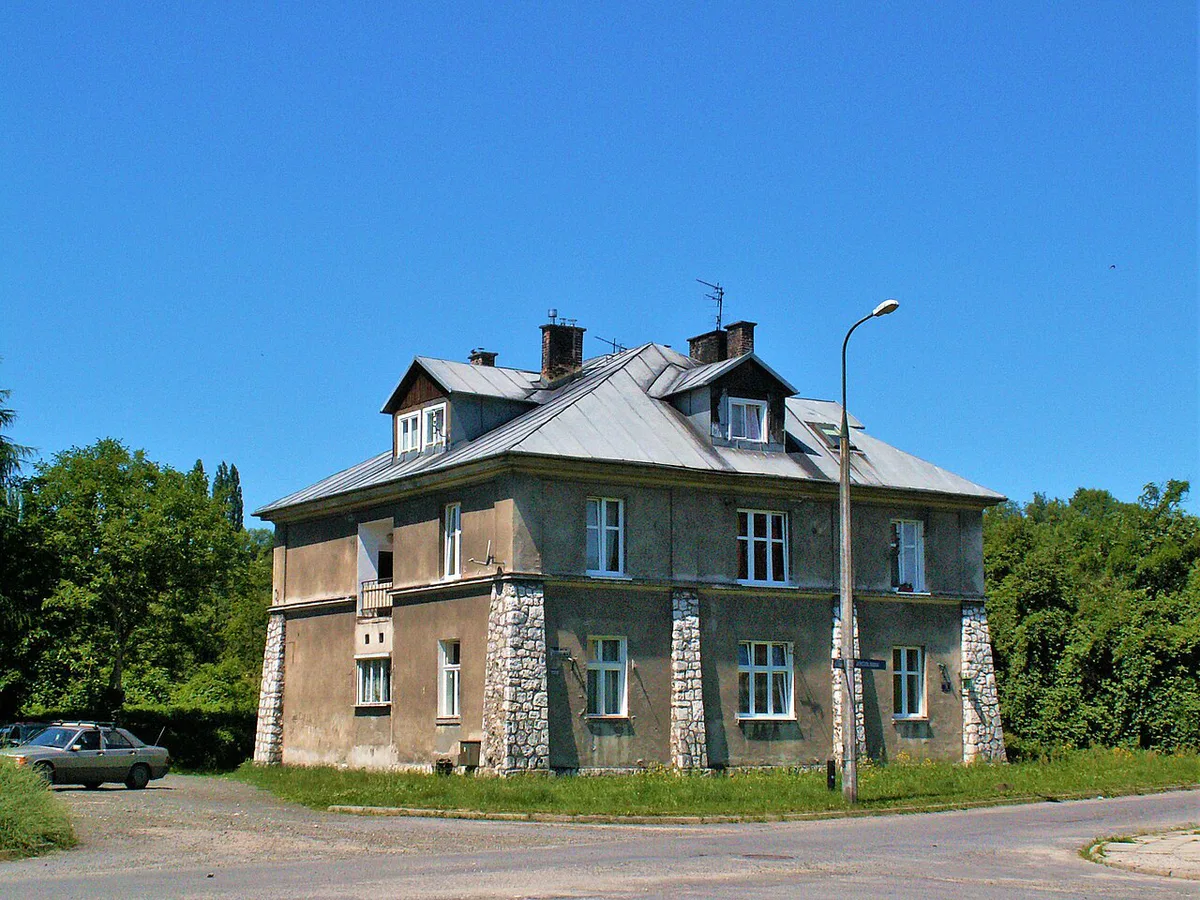
- The Grey House: the former SS administrative building, one of the few original camp structures still standing.
- Ruins of the Jewish Funerary Hall: foundation remains from the old Jewish cemetery the camp was built over.
- Site of the former barracks and Appellplatz: open grassland today; this roll-call square is where the SS forced prisoners to watch punishments and executions.
- Amon Göth's villa (the Red House): privately owned and closed to the public, standing near the former camp grounds.
The Schindler's List Connection at Płaszów
Płaszów is the real camp Schindler's List depicts. Oskar Schindler's enamel factory drew its forced laborers from this camp's population before Schindler negotiated to move a group of workers to his own site, a story documented at the Schindler's Factory Museum. Göth's villa, still standing near the site, matches the one shown in the film. Most of the film's camp scenes, however, were shot next door at Liban Quarry, not on the historic camp grounds. Liban Quarry sits adjacent to Płaszów but is a separate site with its own wartime history. Treat the two as neighbors rather than the same location when you visit.
How to Get to Płaszów from Krakow Old Town
The memorial sits in the Podgórze and Wola Duchacka districts, a walkable but hilly trip from Krakow's Old Town. Three approaches work depending on your time and stamina.
| Route | Notes |
|---|---|
| On foot from Ghetto Heroes Square | A longer walk south through Podgórze; pairs naturally with a stop at the square itself. |
| Tram to Dworcowa or Kabel | Both stops sit closer to the park's entrances than the Old Town walking route. |
| Płaszów railway station | The camp takes its name from this station, located in the same district. |
Costs, Opening Hours, and How Much Time to Spend
The memorial grounds function as a public park: access is open and unrestricted, and there is no entrance fee for the site itself. A permanent museum building is in development on the grounds; check plaszow.org, the official memorial project's website, for its current construction status before a 2026 visit. Because there are no staffed gates, there are no fixed opening hours to plan around, though a daylight visit is strongly recommended given the uneven terrain. Budget 1.5 to 2 hours for a thorough walk that takes in all the main memorial points listed above.
Guided Tours vs Self-Guided Visits
Self-guided visits work well because the Historical Museum of the City of Kraków has installed informational plaques at the main points of interest. That lets you follow the story without a fixed exhibition to walk through. A self-guided pace also means you can move slowly across ground that is uneven and, after rain, muddy. Guided tours, often booked alongside a stop at Schindler's Factory Museum or Ghetto Heroes Square, add context on Göth's command and the ghetto liquidation that plaques alone don't fully convey. Either way, wear sturdy, closed shoes. The paths are unpaved and the terrain is hilly throughout the park.
Visitor Etiquette: Understanding an Open-Air Memorial
Płaszów is a site of remembrance, not a tourist attraction, and it doubles as green space that Podgórze residents use for walking and running dogs. That dual identity can be disorienting: joggers and dog walkers share paths with visitors tracing a site of mass killing. Stay on marked paths, since unmarked graves remain across parts of the grounds. Keep voices low near the Monument to the Victims of Fascism and the former Appellplatz. Avoid posed or celebratory photography anywhere on site. Treat the park with the same restraint you'd bring to a cemetery, because in large part, that's what it still is.
The site was built on two demolished Jewish cemeteries, then served as an execution ground, and now functions as a public park; visitors should treat it with the restraint due a cemetery, since unmarked graves remain throughout the grounds.
Combining a Płaszów Visit with Other Krakow and Poland WWII Sites
Most visitors pair Płaszów with Schindler's Factory Museum and Ghetto Heroes Square, both tied to the 1943 ghetto liquidation described above. For contrast, the Rynek Underground Museum shows a different side of Krakow's history, using interactive displays rather than an open field of monuments. Travelers building a longer Poland WWII itinerary can extend the trip to Warsaw's ghetto uprising sites, or shift focus away from wartime history entirely at Centennial Hall in Wrocław. The Poland's WWII history guide ties these stops into a single planning framework for a longer trip.
How to Follow the Memorial Trail Without a Museum Entrance
Because Płaszów has no single visitor gate, it helps to treat the site as a memorial trail rather than a museum route. A practical starting point is near Kamieńskiego Street on the Podgórze side, where paths lead toward the large Monument to the Victims of Fascism. From there, continue across the open ground toward the former Appellplatz and the marked cemetery remains, using the bilingual information boards from Muzeum KL Plaszow as your anchors.
The Grey House can be hard to identify without context: it is a surviving former SS administrative building, not an exhibit building with public rooms. Amon Göth’s villa, often called the Red House, is also not a visitor site; view it only from public space and do not approach the property. Offline maps are useful because paths branch through grassland and wooded slopes, and signage is spaced between memorial points rather than continuous.
Further reading: Poland on Wikivoyage · Poland on Wikipedia
Frequently Asked Questions
Is the Płaszów concentration camp still standing?
Not as a complete camp complex. Płaszów survives today as an open-air memorial park with a handful of original structures, including the Grey House, alongside monuments and marked sites rather than reconstructed barracks.
How do you get to Płaszów from Krakow Old Town?
Walk south through Podgórze from Ghetto Heroes Square, take a tram to the Dworcowa or Kabel stops, or use Płaszów railway station, which shares the camp's name and district.
Can you visit the house from Schindler's List, Amon Göth's villa?
The villa, sometimes called the Red House, still stands near the memorial grounds, but it remains privately owned and is not open for interior visits.
Is there an entrance fee for the Płaszów memorial?
No. The grounds are an open, unrestricted public park with no entrance fee, though a permanent museum building on site is in development; check plaszow.org for its current status.
How much time should you plan for the Płaszów site?
Plan on 1.5 to 2 hours to walk the main memorial points at an unhurried pace, more if you're pairing the visit with Ghetto Heroes Square or the Schindler's Factory Museum on the same day.
Is Liban Quarry part of the Płaszów concentration camp?
No. Liban Quarry sits next to the historic camp and was used as a film set for Schindler's List, but it has its own separate wartime history and is not part of the original camp grounds.
You might also like


Continue reading
More guides you'll find useful