
Royal Castle Warsaw: A Complete Guide to Poland's Reconstructed Royal Residence
Last updated July 2026, the Royal Castle Warsaw stands at the entrance to Old Town as one of Europe's most improbable success stories: a UNESCO-listed monument that is, structurally, a 20th-century building wearing 17th-century clothes. Rather than treating the royal castle warsaw as just another ancient palace, this guide focuses on the practical questions travelers actually ask — which ticket route to buy, which rooms matter most, and why the reconstruction itself is the real story worth understanding before you arrive. Every recommendation below is grounded in how the castle's layout, history, and ticketing options actually work today.
What Is the Royal Castle Warsaw? The Phoenix of the Old Town
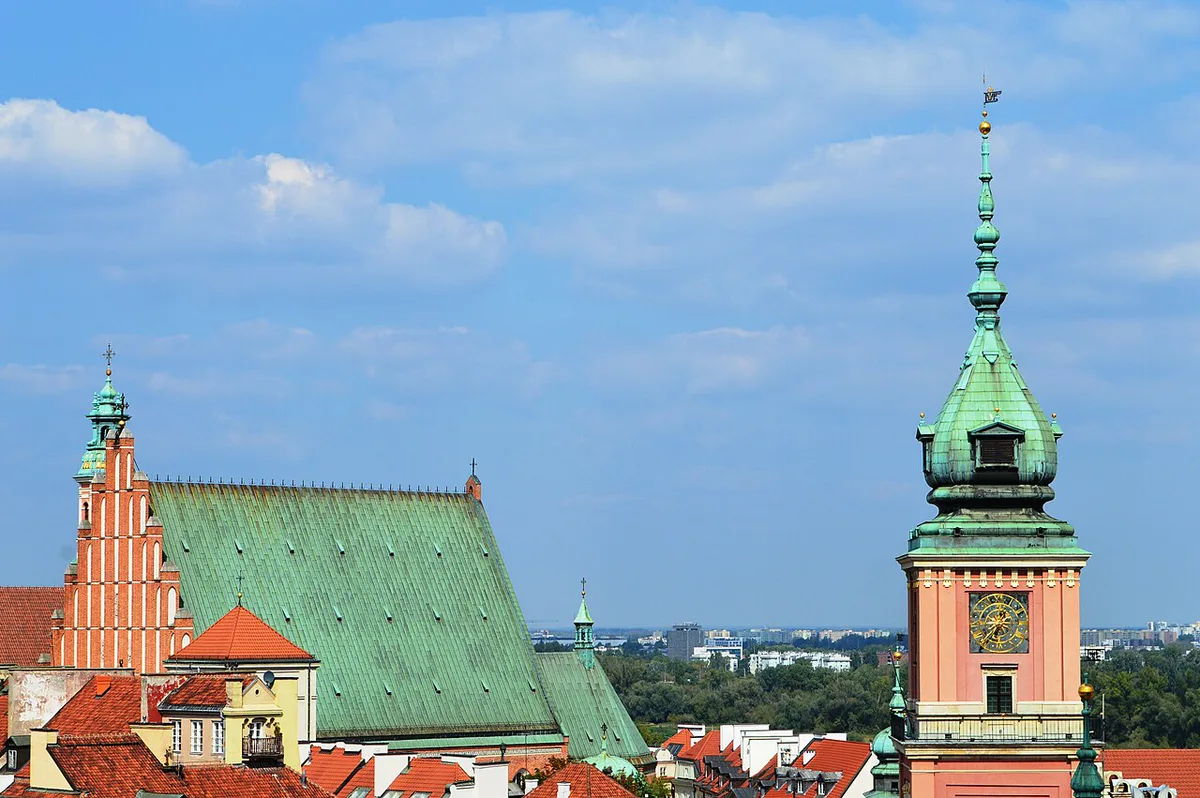
The Royal Castle in Warsaw (Zamek Krolewski w Warszawie) served as the official residence of Polish monarchs and the administrative seat of the royal court from the 16th century until the final partition of Poland in 1795. It sits directly on Castle Square (Plac Zamkowy), marking the formal entrance to Warsaw's Old Town, with Sigismund's Column standing just outside its main facade as the traditional meeting point for the square. What makes a visit here different from touring most European royal residences is the building's status: the current structure is a reconstruction completed between 1971 and 1984, rebuilt on the surviving cellars and wall fragments after near-total demolition in World War II. The castle and the surrounding Old Town were inscribed as a UNESCO World Heritage Site in 1980, specifically because the meticulous rebuilding was considered exceptional enough to qualify a modern reconstruction for heritage status, a rare designation. Understanding this history matters more here than at almost any other European palace, and it directly informs the wider context covered in our 8 Essential Poland History and WWII Sites: The Complete 2026 Guide.
Planning Your Visit: Location, Access, and Ticketing Strategy
The castle is located at Plac Zamkowy 4, at the point where the Royal Route (Trakt Krolewski) begins its run south toward Wilanow. Its position at the edge of Old Town makes it a natural starting or ending point for walks through the historic core, and it sits within easy reach of central Warsaw's public transit network. Because the Royal Castle is a working museum with timed capacity, plan to check the official zamek-krolewski.pl website before traveling for current 2026 opening hours, seasonal closures, and any timed-entry requirements, since these shift by season and museums of this size routinely adjust hours around holidays. Do not rely on third-party listings for opening times or admission costs; the official site is the only reliable source for current ticket prices, and this guide deliberately avoids quoting figures that go stale within months.
- Main Route (Royal Apartments): the core historical circuit through the state rooms, most visitors' primary reason for a ticket
- Copper-Roof Palace (Pałac pod Blachą): a separate, often-skipped ticket covering the adjoining residence
- Combined tickets: check availability if you want to see both routes in one visit
- Timed entry: tickets are frequently sold for specific entry slots, so booking ahead during peak season reduces wait times
Must-See Interior Highlights on the Main Route
Once inside, a handful of rooms justify prioritizing your time if the visit is tightly scheduled. The Great Assembly Hall is the gold-heavy centerpiece of the state rooms, built to project the wealth and authority of the Polish-Lithuanian Commonwealth at its height. The Throne Room reconstructs the regal seat of power with the ornamentation researchers were able to document from pre-war records. Most significant for understanding Warsaw itself is the Canaletto Room, hung with cityscape paintings by Bernardo Bellotto (known as Canaletto) that depicted 18th-century Warsaw in exacting architectural detail. These paintings became essential reference documents during the 1971-1984 reconstruction, allowing architects to rebuild facades, rooflines, and street patterns across the wider Old Town with unusual accuracy, not just inside the castle itself. The Lanckoronski Collection adds further weight to the art holdings, including works attributed to Rembrandt, part of what makes the castle Poland's most visited art museum after Wawel Castle in Krakow.
- Great Assembly Hall: gold-heavy ceremonial centerpiece
- Throne Room: reconstructed royal seat of power
- Canaletto Room: 18th-century cityscapes used to rebuild Warsaw after WWII
- Lanckoronski Collection: European paintings including works attributed to Rembrandt
The Copper-Roof Palace: Is the Extra Ticket Worth It?
The Copper-Roof Palace (Palac pod Blachą), sited beside the main castle, is registered alongside it as part of the same historical monument complex, yet it's frequently skipped by travelers working with limited time. It's worth reconsidering: the building is named for its distinctive copper roofing, unusual among Warsaw's historic residences, and its interior preserves the apartment of Prince Jozef Poniatowski, a significant figure in Polish military history. In our editorial assessment, this stop rewards history-focused travelers far more than casual sightseers passing through the Old Town on a single afternoon; if your schedule allows only one ticket, the Main Route's Royal Apartments should take priority, but travelers with a deeper interest in the Napoleonic era and Polish military history should treat the Copper-Roof Palace as a genuine addition rather than an afterthought.
History and the 1944 Destruction of Warsaw's Royal Castle
The castle's history stretches back to the 14th century, when the first Castle Tower was raised as the seat of the Masovian dukes; remnants of that tower survive to its first storey today. In the early 1600s, Sigismund III Vasa designated the castle to replace Wawel Castle in Krakow as the seat of the king and Parliament, and successive architects, including Matteo Castelli, Giovanni Battista Trevano, and Gaetano Chiaveri, remodeled the medieval Gothic structure into the Mannerist-Baroque form recognizable today. The castle witnessed the drafting of the Constitution of 3 May 1791, the first codified constitution in Europe and the second-oldest in the world, before the building was redesigned in a neoclassical style following the partitions of Poland. Under the Second Polish Republic between 1918 and 1939, it served as the seat of the Polish head of state and president. World War II brought near-total destruction: the Luftwaffe targeted and ignited the castle in September 1939, and German forces detonated the ruins after the failed Warsaw Uprising in 1944. For the fuller story of how the uprising shaped this destruction across the city, see the Warsaw Uprising Museum Guide: Tickets, Hours & Visiting Tips (2026), and for the broader wartime context across Poland, the 8 Essential Poland History and WWII Sites: The Complete 2026 Guide covers how this fits the national picture. In 1965, the surviving wall fragments, cellars, and the adjoining Copper-Roof Palace and Kubicki Arcades were registered as historical monuments, setting the legal groundwork for the reconstruction that followed.
The Great Reconstruction: Rebuilding a Nation's Symbol
Reconstruction of the Royal Castle ran from 1971 to 1984, funded substantially through public contributions during the Communist era, an effort widely read as an act of national resilience rather than a routine restoration project. The rebuild returned the castle to its original 17th-century appearance, drawing on surviving fragments, historical documentation, and the Canaletto paintings described above. This is the detail most general Old Town guides gloss over: the building tourists walk through today is barely older than the 1980s in structural terms, even though its foundations and cellars are genuinely medieval. Recognizing this reconstruction as the achievement it was changes how the whole visit reads, from an exercise in nostalgia into a monument to postwar Polish identity.
The Canaletto paintings' architectural precision did more than decorate the castle—they provided the blueprint for rebuilding facades, rooflines, and street patterns across the entire Old Town after WWII destruction. This transformed a single art collection into the key that reconstructed an entire medieval quarter.
The Chicago Replica: A Bridge for the Polish Diaspora
Warsaw's Royal Castle has a lesser-known architectural cousin in Chicago, where the Gateway Theatre at the Copernicus Center incorporates a replica facade referencing the castle. The replica functions as a cultural touchstone for Chicago's large Polish diaspora community, a physical link between the rebuilt original in Warsaw and the Polish-American communities who, in some cases, contributed to preserving Polish heritage and history abroad during the years when the homeland original still lay in ruins. Travelers researching Polish-American heritage sites may find this connection adds unexpected resonance to a Warsaw visit, even though the replica itself sits thousands of kilometers away.
Strategic Tips and Mistakes to Avoid at the Royal Castle Warsaw
A few planning missteps are common enough to flag directly. The biggest is assuming the building is simply old; treating it as a masterpiece of 20th-century restoration rather than an ancient artifact will change how you experience every room. Arriving without checking current hours is another frequent error, since museum hours and any free-admission days shift seasonally and are confirmed only on the official site. For travelers with more time, combining the castle with a walk down the Royal Route toward Wilanow extends the historical narrative well beyond the Old Town core. For photography, Castle Square offers the classic view anchored by Sigismund's Column, while the gardens on the Vistula River side of the complex give a markedly different, quieter perspective on the same building.
- Mistake: treating the castle as an untouched ancient structure rather than a 1971-1984 reconstruction
- Mistake: skipping a check of current opening hours and timed-entry rules before traveling
- Tip: pair the visit with a walk down the Royal Route toward Wilanow
- Tip: photograph from Castle Square for the classic view, or the Vistula-side gardens for a quieter angle
Interesting Facts and Hidden Details Worth Knowing
A handful of small details reward closer attention once inside. The castle's tower clock has long been associated with the moment the building was first struck during the 1939 bombing, a detail many visitors miss entirely while moving through the main state rooms. Elsewhere, original pre-war fragments, salvaged stonework and architectural elements, were deliberately embedded into the new construction during the 1971-1984 rebuild, meaning some pieces of wall or detailing visitors touch today are genuinely centuries old even within an otherwise reconstructed building. These embedded fragments are, in many ways, the most tangible link between the medieval and Baroque castle and the one standing today.
The castle's rebuilt walls contain deliberately embedded pre-war fragments and salvaged stonework—making parts visitors touch genuinely medieval even within a 1971-1984 structure. This fusion of new craftsmanship with authentic pieces explains why the reconstruction itself earned UNESCO recognition, transforming it from restoration into historical documentation.
Extending Your Trip: Poland's Wider WWII History
Because the Royal Castle's story is inseparable from Poland's 20th-century history, many travelers use Warsaw as a base for exploring the country's broader WWII sites. Those heading north toward the Baltic coast can pair a Warsaw visit with the Stutthof concentration camp near Gdansk, while travelers interested in wartime command history may plan a stop at the Wolf's Lair guide in the Masurian forests. Those focused on the darker chapters of the occupation can also reference the Majdanek Concentration Camp Memorial: A Practical Visiting Guide for context on the wider network of wartime sites across the country. Together with the castle itself, these stops build a fuller picture of how the events covered in the WWII destruction section above played out across Poland as a whole.
How to Navigate Castle Square, Entrances, and the Vistula Side
The easiest way to orient yourself is to treat Sigismund's Column in Castle Square as the front door marker. From the column, the castle's main facade is directly beside you, while the Old Town lanes lead north toward the Old Town Market Square and the Royal Route begins south along Krakowskie Przedmiescie. If arriving by tram or bus, the Stare Miasto area puts you closest to the square; from there, walk toward the column rather than trying to approach the castle from the riverbank.
The Vistula side of the complex sits lower and feels very different from the busy square. This is where the castle gardens, Kubicki Arcades, and river-facing views help explain the building's defensive and ceremonial position above the escarpment. The Copper-Roof Palace is adjacent to the main castle, so do not think of it as a separate neighborhood stop; it is best added immediately before or after the Royal Apartments route.
Further reading: Poland on Wikivoyage · Poland on Wikipedia
Frequently Asked Questions
What is the Royal Castle in Warsaw actually a reconstruction of?
It is a rebuild of the royal residence that stood on the same site from the 16th century onward, largely destroyed by German forces in 1944. The current structure was reconstructed between 1971 and 1984 using surviving cellars, wall fragments, historical documentation, and the Canaletto cityscape paintings as reference material.
Is the Royal Castle Warsaw worth visiting if it's not the original building?
Yes; in our editorial assessment, the reconstruction is precisely what makes the visit distinctive rather than diminishing it. The castle earned UNESCO World Heritage status alongside the rest of Old Town specifically because the rebuilding effort was considered exceptional, making it as much a monument to 20th-century Polish resilience as to its original monarchs.
How much time should plan for a visit to the Royal Castle?
Allow enough time to cover the Main Route's Royal Apartments unhurried, and factor in additional time if adding the Copper-Roof Palace ticket. Because entry is often timed, check the official zamek-krolewski.pl website before arriving to confirm current 2026 hours and any slot-booking requirements.
What is the difference between the Castle Tour and the Copper-Roof Palace?
The Castle Tour (Main Route) covers the Royal Apartments and headline rooms like the Great Assembly Hall, Throne Room, and Canaletto Room. The Copper-Roof Palace is a separate adjoining building with its own ticket, centered on the apartment of Prince Jozef Poniatowski, and is generally better suited to travelers with a deeper interest in Polish history rather than a first-time overview visit.
Why are the Canaletto paintings important to Warsaw's history beyond the castle itself?
The 18th-century cityscapes by Bernardo Bellotto (Canaletto) documented Warsaw's streets, facades, and rooflines in precise architectural detail. During the 1971-1984 reconstruction, these paintings served as reference material not just for the castle's interior but for rebuilding the wider Old Town after WWII destruction.
You might also like


Continue reading
More guides you'll find useful